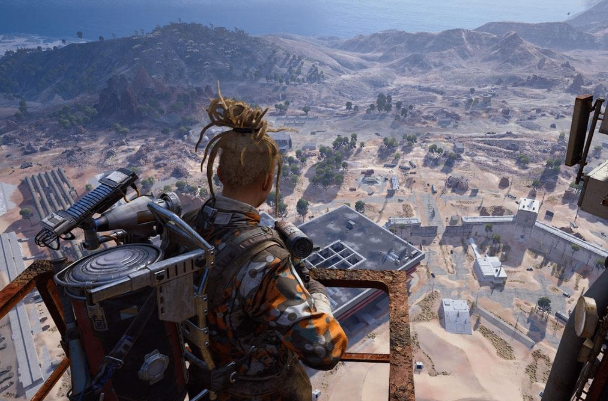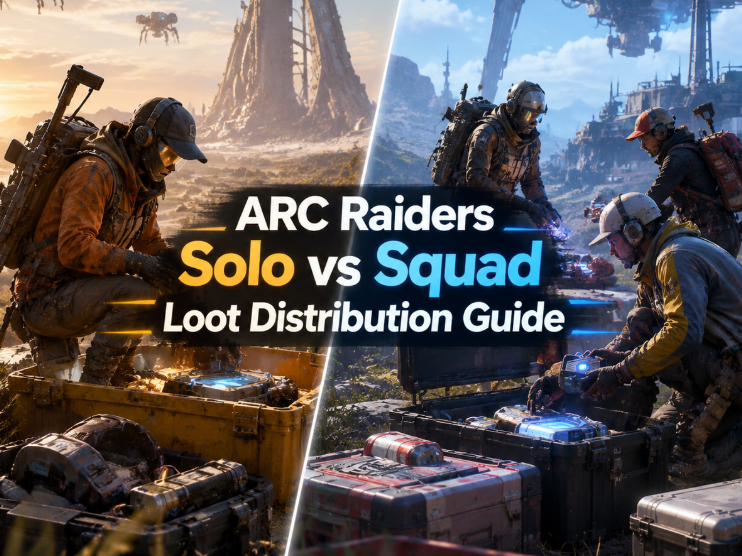
Resource management feels very different when playing ARC Raiders alone compared with running a full squad. Solo players have complete control over every item they extract, while teams have to balance individual needs with the overall strength of the group.
The difference becomes most noticeable when rare materials, valuable equipment, or progression items appear. Without a clear system, even a successful raid can end with arguments over who should take the best loot.
Solo Loot Efficiency
Solo players have one major advantage: every useful item goes directly toward their own progression. There is no need to divide backpack space or decide whether another player needs a particular resource more.
However, limited inventory space makes prioritization extremely important.
A good solo loot hierarchy is:
- Rare progression materials
- Items needed for current crafting
- High-value equipment
- Blueprint-related resources
- Common materials
- Low-value items that can be replaced easily
The key is to avoid filling your backpack with cheap resources too early. If you find valuable ARC Raiders Items later in the raid, you want enough space to take them home.
Use a Value-per-Slot Mindset
Solo players should constantly ask whether an item is worth the inventory space it occupies.
For example, carrying several stacks of common materials may feel productive, but those slots could prevent you from taking a rare component discovered later.
A simple rule works well:
- Keep rare items whenever possible.
- Replace common resources when better loot appears.
- Do not stay in dangerous areas simply to fill the last few inventory slots.
- Extract when the backpack contains enough value to justify the risk.
This approach turns each raid into a decision about efficiency rather than simply collecting everything you see.
Squad Loot Requires a System
Team play creates a different problem. Four players can carry much more total loot, but the group also has to decide who gets what.
The easiest way to prevent conflict is to establish basic rules before the raid begins.
A fair system can look like this:
| Loot Type | Recommended Priority |
|---|---|
| Weapon upgrades | Player using that weapon type |
| Character-specific resources | Player who needs them |
| Blueprint materials | Player currently progressing that blueprint |
| Duplicate rare items | Player with the weakest inventory |
| General crafting materials | First player who needs them |
| High-value trade items | Discuss before taking |
The exact system can change between groups, but consistency matters more than the specific rule.
Give Priority Based on Need
Equal distribution does not always mean splitting everything 25/75 or giving every player the same number of items.
A better system is need-based distribution.
For example, if one teammate is missing a rare resource required for an upgrade while another already has several copies, giving the new resource to the first player improves the entire team’s progression.
The same principle applies to ARC Raiders Bps. If one player is actively working toward a specific blueprint while another has no use for the required materials, prioritizing the first player can make the squad stronger overall.
Handling High-Value Loot
Rare items are where most disagreements happen. The safest approach is to establish a rule before the item is picked up.
Possible systems include:
- First meaningful need gets priority.
- Rotate rare drops between teammates.
- Use a random roll for equally useful items.
- Give priority to the player who contributed the most resources.
- Sell the item later and divide the resulting value.
For regular groups, rotating rare loot is often the easiest solution. If one player receives the first valuable item, another player gets priority on the next comparable drop.
Avoid Loot Arguments During Combat
Never stop in the middle of a dangerous encounter to debate an item. Survival comes first.
If a valuable item appears while ARC enemies or another squad are nearby:
- Secure the area.
- Mark or remember the item.
- Finish the immediate threat.
- Decide who needs it.
- Continue the raid.
This prevents a valuable ARC Raiders Items drop from becoming the reason the entire squad gets wiped.
When Someone Should Get More
There are situations where unequal distribution is completely reasonable.
A player who has lost equipment may need a replacement weapon. Another teammate may already have a full stash of the same gear. Giving the weaker player priority can increase the squad’s overall chance of surviving the next encounter.
Likewise, players saving resources to buy ARC Raiders Bps may benefit from receiving specific high-value materials rather than generic loot.
The goal should be team efficiency, not perfect mathematical equality.
Solo players maximize loot by focusing on value per inventory slot and extracting before greed takes over. Squads need something different: clear communication and consistent distribution rules.
The best teams do not argue over every rare item. They decide beforehand how specialized resources, blueprints, weapons, and valuable materials will be handled.
Whether you are playing alone or with friends, the basic principle remains the same: every extraction should improve your next raid. Efficient loot decisions make that progression faster, while a simple distribution system keeps the team focused on surviving rather than fighting over the backpack.