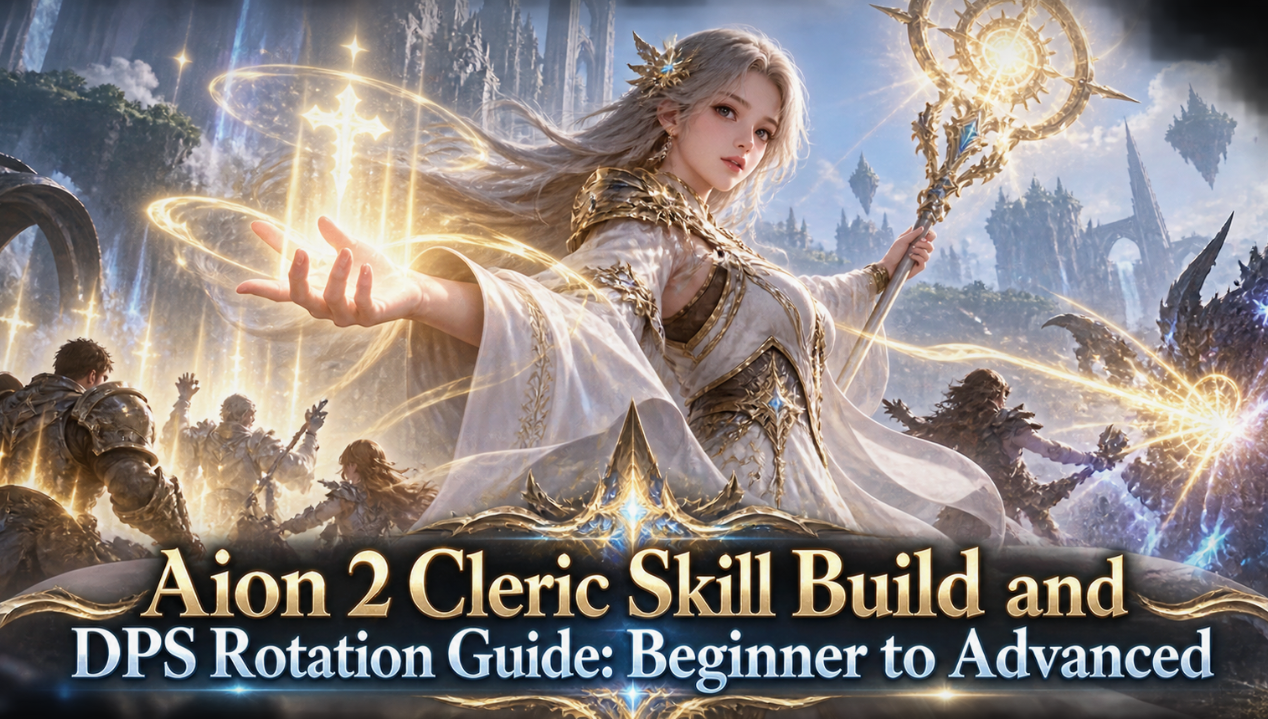
The Cleric is one of the most important classes in Aion 2 for group content. Its main responsibility is keeping the party alive, but a good Cleric should not spend the entire fight standing still and waiting for someone to lose HP. When the party is stable, there are plenty of opportunities to contribute damage and maintain useful debuffs.
The biggest difference between a beginner and an experienced Cleric is usually not raw healing power. It is knowing when to heal, when to attack, and when to save a cooldown for the next mechanic.
Beginner Skill Priority
New Clerics should avoid spreading skill points too widely. Building a small group of reliable skills first makes leveling and early dungeons much easier.
A practical early priority is:
- Radiant Recovery – A key party recovery skill that also provides important utility.
- Healing Light – Your regular healing tool for keeping injured allies healthy.
- Condemnation – One of the main offensive skills for dealing damage between healing windows.
- Earth’s Retribution – Useful as part of your regular damage chain.
- Bolt – Another important offensive option when there is no urgent healing required.
- Light of Regeneration – Valuable for sustained party recovery.
This gives the Cleric a balanced setup rather than forcing the character into a pure healing or pure damage role.
For players leveling their first character, spending Aion 2 Kinah on every available upgrade is usually unnecessary. Prioritize useful equipment upgrades and resources that directly improve your current progression instead of trying to perfect the character too early.
Core Healing Rotation
Cleric healing does not work well as a rigid button-by-button rotation. Your priority should change according to the party’s health and the encounter.
A simple healing priority looks like this:
Light of Regeneration → Healing Light → Radiant Recovery → emergency skills
Use Light of Regeneration when the group is going to take sustained damage. It provides recovery over time and is more valuable when used before the party reaches critical HP.
Healing Light is your regular response to injured allies. It is especially useful when only one or two players need attention.
When several party members are damaged or a dangerous effect needs to be removed, Radiant Recovery becomes much more important. Do not waste your strongest party recovery tool on minor damage if a larger mechanic is about to happen.
The Cleric also has defensive and emergency tools that should be treated as part of the encounter rather than ordinary rotation buttons. Save them when you know a boss mechanic is coming.
Advanced DPS Rotation
Once you are comfortable keeping everyone alive, you can start adding more damage.
The basic offensive sequence is built around Chain of Torment and Condemnation. Chain of Torment helps establish the condition needed for Condemnation, making the two skills work together rather than treating them as separate attacks.
A simple damage loop is:
Chain of Torment → Condemnation → Divine Aura → Earth’s Retribution → Bolt
The exact order can change depending on cooldowns, movement, and the current target. The important point is to maintain your offensive effects while leaving enough attention for party health.
At higher skill levels, Condemnation becomes particularly important to the Cleric’s damage loop. Its interaction with Chain of Torment can create repeated damage opportunities, while Earth’s Retribution remains useful as a regular attack chain.
How to Play Cleric More Efficiently
The best Clerics do not react to every HP bar independently. They watch the encounter and prepare for damage before it happens.
Keep these habits in mind:
Pre-cast or maintain recovery effects before predictable group damage.
Keep Chain of Torment active when you are preparing to use Condemnation.
Never delay an important heal just to finish a damage combo.
Save emergency abilities for mechanics that can actually kill someone.
Stay close enough to the party for healing ranges to matter.
Avoid standing in dangerous areas simply because you are focused on your rotation.
When everyone is healthy, use the opportunity to maintain your damage instead of waiting.
This is where Aion 2 Boosting can look very different for a Cleric compared with a pure DPS class. A strong Cleric is not measured only by damage numbers. Keeping the party alive, cleansing dangerous effects, managing cooldowns, and contributing damage during safe windows are all part of playing the class well.
From Beginner to Advanced
For a new Cleric, survival and reliable healing should always come first. Once the basic healing priorities become automatic, start learning boss mechanics and add offensive skills between recovery windows.
At the advanced level, the goal is to avoid choosing between healing and damage whenever possible. Good positioning, cooldown planning, and knowledge of incoming mechanics allow you to do both.
The Cleric becomes much more rewarding once you stop thinking of it as a class that only heals. You are managing the entire pace of the party: preventing deaths, supporting teammates through dangerous mechanics, and using every safe moment to help finish the fight faster.